Last updated 2026-07-25
TL;DR
Home hardening means replacing the materials and gaps on your house that let embers start a fire: roof, vents, gutters, and the 0-5 foot zone around the foundation. CAL FIRE data shows embers, not flame fronts, destroy most homes. California's Zone 0 ember-resistant zone rule (SB 63) is still pending final regulations as of mid-2025, with enforcement expected no earlier than 2026.
What does "home hardening" actually mean?
Home hardening is the practice of upgrading the materials and construction details on an existing house so it can survive an ember storm without a firefighter standing next to it. It is not landscaping, though the two work together. Hardening covers the roof, vents, eaves, windows, siding, decks, gutters, and the first five feet of ground touching the house. CAL FIRE's own guidance puts it plainly: "During a wildfire, homes often catch fire from embers, not from the flame front of the fire itself." That single sentence explains why hardening focuses so heavily on tiny openings. A quarter-inch gap under a vent screen, a plastic gutter full of dry leaves, or a wood fence that runs straight into the siding will let a house burn down even when the fire front itself never reaches the property line. The practical order of operations most fire-science people recommend: fix the roof and vents first (embers enter through the attic more than any other path), then the 0-5 foot zone, then windows and decks, then siding. Landscaping in Zones 1 and 2 matters, but it buys you time and reduces radiant heat; it does not stop an ember that lands in your attic through a gap you never sealed. Insurers increasingly ask for photographic proof of exactly this list, which is why documentation of hardening work matters almost as much as the work itself when you're facing a non-renewal letter or trying to get reinstated.
When does the California defensible space law go into effect?
California's existing defensible space law, Public Resources Code 4291, has been in effect for years and already requires 100 feet of defensible space clearance around structures in State Responsibility Areas (or to the property line, whichever is less). [1] What's new and still pending is the "Zone 0" ember-resistant zone rule created by SB 63 (2024), which would require the 0-5 foot zone immediately around a home to be nearly free of combustible material. As of mid-2025, the Board of Forestry and Fire Protection had not finalized the Zone 0 regulations. The law directs the Board to adopt regulations, and enforcement was originally floated for 2023 in earlier versions of this policy, then pushed back. Under SB 63, the statutory framework sets an operative date no earlier than January 1, 2026, for local governments to begin requiring compliance, and that timeline depends on the Board actually finishing the regulatory text first. [2] Translation for homeowners: don't wait for the final rule to start clearing Zone 0. The draft standard is consistently described the same way across CAL FIRE materials, no combustible mulch, no wood fencing attached to the house, no vegetation touching the walls, within that first 5 feet. Building to that standard now costs you nothing in penalties and puts you ahead of whatever your county fire district decides to enforce first. Check your own county and fire district page for the exact local timeline, because SB 63 lets enforcement roll out district by district rather than as one statewide flip of a switch. [Enter your fire district's specific Zone 0 enforcement date here.]
What fire-safe home rules take effect in 2026?
The headline 2026 date belongs to Zone 0. Under SB 63's framework, local jurisdictions may begin requiring the 0-5 foot ember-resistant zone starting January 1, 2026, once the Board of Forestry finalizes the technical regulations it's required to adopt. [2] Nothing about this is retroactive punishment; it's a forward compliance date tied to inspections and point-of-sale disclosures in high fire severity zones. Separately, California's existing home hardening building code, Chapter 7A of the California Building Code, already applies to new construction and additions in Wildland-Urban Interface Fire Areas, requiring ignition-resistant materials for roofing, vents, windows, and siding. [3] Chapter 7A isn't a 2026 change, it's the baseline that new homes in these zones have had to meet for years; retrofitting existing homes to the same standard is voluntary but is exactly what insurers are now asking to see. Oregon and Colorado are moving on parallel but separate tracks. Oregon's SB 762 wildfire risk map and defensible space code program was paused and restarted after public pushback in 2022 and 2023, and Colorado has no single statewide hardening mandate, leaving requirements to county and local wildfire ordinances instead. Arizona similarly defers to county and fire district rules rather than one statewide hardening law. If you live outside California, your enforceable deadline is almost always local, not a state law. [Enter your state fire marshal's current wildland-urban interface code adoption status here.]
Why won't people follow the defensible space law in California?
Compliance with PRC 4291's 100-foot clearance rule is genuinely uneven, and the reasons aren't laziness so much as cost, confusion, and competing rules. A widely cited problem is that many homeowners simply don't know the law applies to them, especially newer residents in areas that only recently got mapped into a Fire Hazard Severity Zone. Cost is the second real barrier. Clearing dense brush on a sloped, wooded acre-plus lot can run into thousands of dollars for professional removal, chipping, and hauling, and CAL FIRE inspections often find partial compliance rather than willful refusal. Some homeowners also worry, sometimes correctly, that aggressive clearing conflicts with local tree ordinances, HOA rules, or erosion control requirements on hillside lots, and they freeze rather than call in the wrong contractor. There's also a documented gap between knowing the rule exists and knowing what it actually requires. The 100 feet breaks into two different zones (0-30 feet, lean and green; 30-100 feet, reduced fuel) with different standards for each, and homeowners who read "100 feet of clearance" often assume it means a bare dirt perimeter, which isn't the rule and isn't even good for erosion control. Local fire departments that do inspections report that clear, specific guidance, not more general warnings, is what actually moves compliance rates. [Enter your local fire department's most recent defensible space inspection pass rate here.] If you want the itemized breakdown of what goes in each ring around the house, the defensible space zones guide walks through Zone 1 and Zone 2 requirements side by side.
How do you prevent wildfires from starting in the first place?
Most wildfires in the U.S. are not caused by lightning, they're caused by people. Roughly 85 percent of wildland fires are human-caused, according to the National Interagency Fire Center's aggregated federal wildfire statistics, and that share includes debris burning, equipment sparks, unattended campfires, and downed power lines. [4] Ready.gov's wildfire prevention guidance focuses on the everyday behaviors that create most of that risk: never leaving a campfire unattended, avoiding outdoor burning on red flag warning days, keeping vehicles and equipment off dry grass (a hot catalytic converter alone has started fires), and maintaining chainsaws and mowers so they don't throw sparks into dry vegetation. On your own property, prevention is really just fuel management extended outward: clearing dead vegetation, keeping a mowed perimeter, and not stacking firewood against the house. None of this replaces hardening, but it reduces the odds a fire starts near your home at all rather than just surviving one that starts somewhere else. Utility-caused fires are a smaller but disproportionately destructive category; California's investor-owned utilities are now required to file wildfire mitigation plans with the CPUC specifically because a handful of power-line-caused fires (Camp Fire, Thomas Fire) caused a wildly outsized share of total damage. As a homeowner you can't control utility infrastructure, but you can control the vegetation on your side of the property line that a downed line might ignite.
How do you prepare for a wildfire before it happens?
Wildfire preparation has three layers: the house itself, an evacuation plan, and documentation you can hand to an insurer or FEMA if the worst happens. Most people only think about the first layer, and that's the one insurers are grading hardest right now. Ready.gov's wildfire preparedness checklist centers on defensible space, an evacuation plan practiced with everyone in the household, a "go bag" ready before fire season starts, and staying tuned to local emergency alerts rather than assuming you'll see smoke in time. CAL FIRE adds the practical home-specific list: clear roofs and gutters of debris, screen all vents with 1/8 inch metal mesh, store firewood at least 30 feet from the house, and keep a garden hose long enough to reach every side of the structure. The documentation layer is the one most guides skip. Before fire season, walk your property and photograph every hardening upgrade you've made, receipts for roofing and vent work, dated photos of your cleared defensible space zones, and your home's construction details (roof material, siding type, deck material). This isn't about proving anything to a claims adjuster after a loss, it's about having the paperwork ready if your insurer sends an inspection or non-renewal letter and asks what you've done. A Wildfire Insurance Survival Kit is built around exactly this: a $99 one-time toolkit that helps you organize photos, receipts, and hardening records into the format insurers and FAIR Plans actually ask for. It doesn't file claims or represent you in any dealings with your insurer, it just gets your own paperwork in order before you need it.
How do you prevent forest fires and how do you avoid them?
Preventing forest fires and preventing home ignition are related but different problems, and conflating them is where a lot of advice goes wrong. Forest fire prevention is mostly about what happens in wildland areas, not on residential lots: not burning debris during red flag conditions, properly extinguishing campfires (drown, stir, drown again, until it's cold to the touch), keeping off-road vehicles and chainsaws away from dry grass, and reporting unattended fires immediately rather than assuming someone else will. Avoiding forest fires as a hiker or camper comes down to checking current fire restrictions before you go (many national forests post burn bans by district, not statewide), never parking a hot vehicle on dry vegetation, and carrying a way to fully extinguish a fire, more than a lighter to start one. The Forest Service's own statistics attribute the large majority of wildland fire starts to preventable human activity rather than lightning, which is the single most useful fact for changing behavior: this isn't mostly bad luck, it's mostly avoidable ignition sources. [4] For homeowners near wildland, the overlap that matters is your defensible space acting as a buffer if a forest fire does start nearby. That's the bridge between "preventing forest fires" (a landscape-scale problem) and "hardening your home" (a property-scale one): you can't control whether a fire starts three ridgelines away, but you can control whether your house is defensible when it arrives.
Roof, vents, and gutters: where do embers actually get in?
| Roof | High (largest surface area exposed to embers) | Class A rated roofing (asphalt, tile, metal) | |
|---|---|---|---|
| Vents | High (direct path into attic and crawlspace) | 1/8 inch metal mesh or ember-resistant vents | |
| Gutters | Moderate to high (dry debris ignites easily) | Metal guards, seasonal debris clearing | |
| Windows | Moderate (radiant heat can shatter single-pane glass) | Dual-pane, tempered glass | |
| Decks | Moderate (attached fuel source touching the house) | Ignition-resistant decking, enclosed underside | |
| Siding | Lower but not negligible | Non-combustible siding (stucco, fiber cement, metal) | If your roof or vents need full replacement rather than a patch job, get quotes before your next renewal date; insurers reviewing wildfire risk increasingly want to see the roof material and age listed, more than the address. |
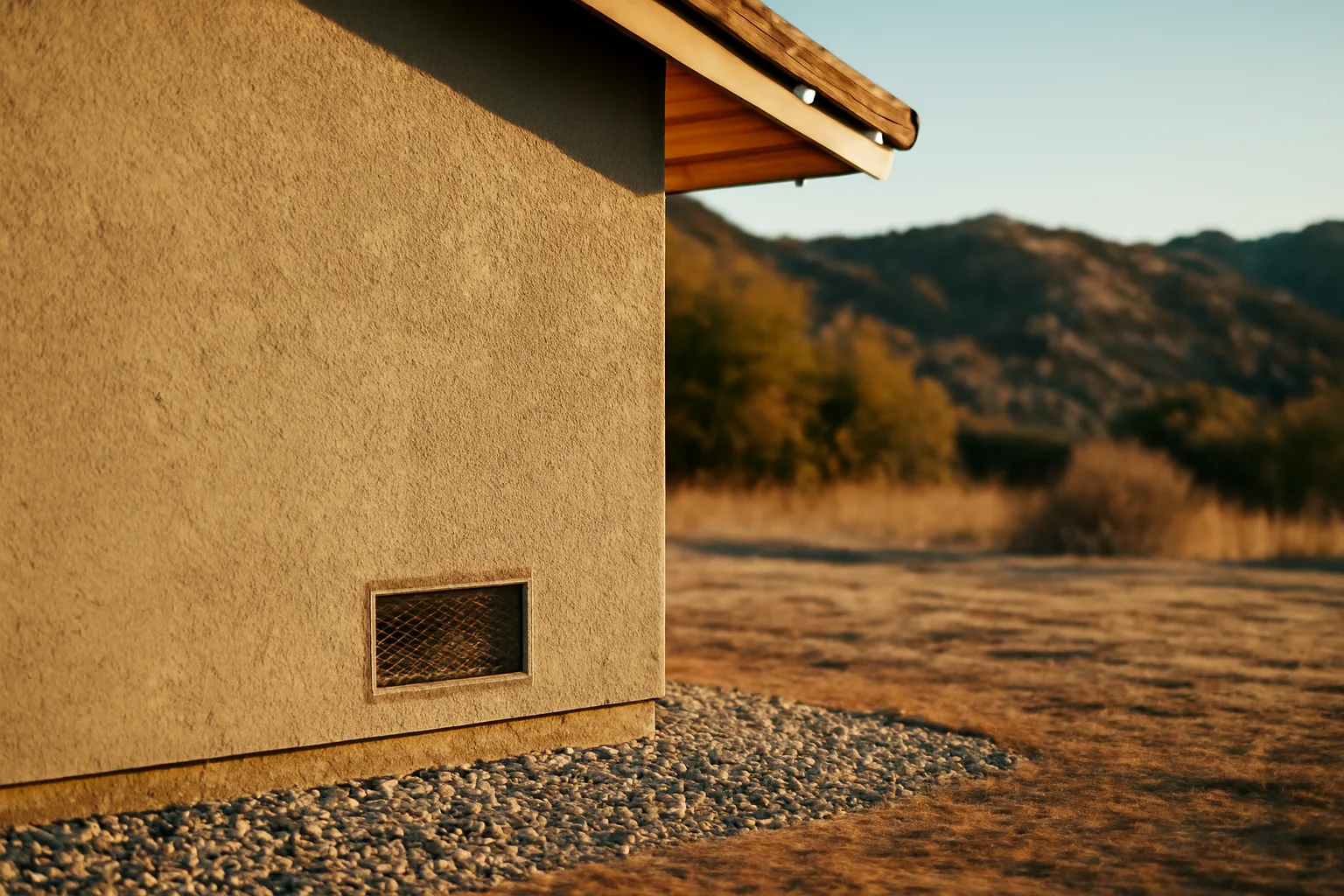
Embers get into homes through the smallest gaps, and the roof-vent-gutter system is where most ignitions start according to CAL FIRE's structure hardening guidance. A Class A fire-rated roof (asphalt shingle, tile, or metal) is the baseline; wood shake roofs are a documented liability in every major post-fire investigation. Vents are the sleeper risk most homeowners miss entirely. Standard attic and foundation vents are built for airflow, not ember resistance, and a vent with standard 1/4 inch mesh lets embers straight through into an attic full of dry insulation and framing lumber. CAL FIRE recommends 1/8 inch metal mesh screening on all vent openings, or ember-and-flame-resistant vents specifically rated for wildfire exposure. Gutters clogged with dry leaves and pine needles are essentially a fuse running along your roofline; a single ember landing in a dry gutter can ignite the fascia board and roof edge in minutes. Metal gutter guards or seasonal cleaning before fire season starts is cheap insurance against an expensive failure point. | Component | Ember risk if unaddressed | Typical hardening fix |
Zone 0, the 0-5 foot rule: what actually goes there?
Zone 0 is the five feet of ground touching your house, and it's the single highest-leverage hardening zone because it's where a wind-blown ember is most likely to land and find fuel directly against combustible siding. California's draft Zone 0 standard under SB 63 calls for no combustible mulch, no wood fencing or gates attached to the structure, and no vegetation overhanging or touching exterior walls within that band. [2] What's allowed: hardscape (gravel, pavers, concrete), non-combustible mulch alternatives, and well-spaced, well-irrigated low plants that aren't touching the house, as long as they're not stacked against a wall or under a window. What's not allowed under the draft standard: bark mulch, dry leaf litter, wood fences that run into the house, stored firewood, propane tanks close to the structure, and dense shrubs pressed against siding. This is also the zone where a lot of well-intentioned landscaping backfires. Junipers and other resinous, oily shrubs are a known high-risk planting right next to a foundation because they ignite readily and burn hot; the fire-safe landscaping guide for California homes covers plant-by-plant swaps if you're redoing beds near the house anyway. Doing Zone 0 right costs far less than most hardening categories: it's mostly removal and material swaps (gravel instead of mulch, moving the woodpile) rather than construction. If you do nothing else on this list before your next inspection, do Zone 0 first.
Is Santa Barbara safe from fire, and what does that mean for a specific address?
No single California city, Santa Barbara included, can be called "safe from fire" in a meaningful sense, because wildfire risk is hyper-local: it depends on your specific parcel's slope, vegetation, prevailing wind exposure, and distance to wildland, not on city limits. Santa Barbara County has a documented history of major fires, including the 2017 Thomas Fire and the debris flow that followed in Montecito, which killed 23 people, one of the deadliest post-fire disasters in recent California history. [5] CAL FIRE's Fire Hazard Severity Zone maps are the actual tool for answering this question for a specific address, they classify land as Moderate, High, or Very High severity based on fuel, terrain, and fire history, and large portions of the Santa Barbara foothills and wildland-urban interface fall into High or Very High zones. A house two blocks from the beach and a house in the foothills above the same city can have completely different risk classifications despite sharing a zip code. The honest answer for any specific property: check your parcel's CAL FIRE hazard zone classification directly rather than relying on a city's general reputation, and treat proximity to open wildland, not distance from downtown, as the driver of your actual exposure. [Enter your specific fire hazard severity zone classification here.]
What does home hardening actually cost, and where should the money go first?
There's no single national number for hardening a home because costs vary enormously with house size, existing materials, and region, but the order-of-operations logic holds everywhere: cheap, high-leverage fixes first, expensive full-system replacements later. Zone 0 cleanup (removing combustible mulch, moving firewood, swapping to gravel) is the cheapest category, often a few hundred dollars in materials plus labor if you don't do it yourself. Vent screening upgrades run modest material costs per vent but benefit from a licensed installer if you're also correcting airflow. Gutter guards are a moderate one-time cost. Full roof replacement to Class A material and a full window replacement to dual-pane tempered glass are the largest line items, often the most expensive parts of a hardening project, but also the parts insurers and Chapter 7A code both weight most heavily. [3] A practical way to sequence spending if the budget is tight: Zone 0 and vent screening first (lowest cost, highest ember-risk reduction), then gutters, then decking if it's older wood construction, then roof and windows as full-replacement budget allows, planned around when those components need replacement anyway. Insurers reviewing a property for renewal are increasingly asking specifically about roof age and material, vent screening, and defensible space compliance, in roughly that order of scrutiny, so that spending sequence tends to match what actually keeps or restores coverage eligibility.
How do you document hardening work for an insurer or FAIR Plan?
Insurers and state FAIR Plans generally want the same four things: dated photos of the completed work, receipts or contractor invoices, a written description of materials used, and confirmation the work meets the applicable code or standard (Chapter 7A, local defensible space ordinance, or Zone 0 standard once finalized). Photograph before-and-after for every zone: roof and vents, the 0-5 foot ring, gutters, decking, and any siding replacement. Keep contractor invoices that specify material type ("Class A asphalt shingle," "1/8 inch metal mesh vent screen") rather than vague line items, since insurers reviewing wildfire mitigation credits or FAIR Plan reinstatement requests are looking for specifics that map to a known standard, more than "home improvements." This documentation step is where a lot of homeowners lose ground they've actually earned. You did the work, but if you can't produce dated proof in the format an underwriter or FAIR Plan reviewer expects, it doesn't help your case. This is the exact gap the Wildfire Insurance Survival Kit is built to close: a one-time $99 toolkit for organizing your hardening records, photos, and defensible space proof into a package ready to send. It does not represent you with your insurer, file a claim, or promise any specific coverage outcome; you send your own documentation, on your own timeline, in your own name. If your house has already had a fire event, even a small one, the house fire and fire at a house guides cover what documentation matters differently after an active loss versus a preventive hardening project.
Frequently asked questions
When does the California defensible space law go into effect?
The base defensible space law, PRC 4291's 100-foot clearance rule, has been in effect for years. The newer Zone 0 ember-resistant zone rule from SB 63 has a statutory framework allowing local enforcement starting no earlier than January 1, 2026, but depends on the Board of Forestry finalizing regulations first. Check your county fire district for its specific rollout date.
Why won't people follow the defensible space law in California?
Cost of professional clearing, confusion about what the two 100-foot zones actually require, conflicts with HOA or tree-preservation rules, and simply not knowing the law applies to their parcel are the main documented reasons. It's rarely outright refusal; it's usually a mix of expense and unclear guidance about what "compliance" specifically looks like on a given lot.
How can we prevent forest fires?
Most forest fires are human-caused, not lightning-caused, according to National Interagency Fire Center data. Fully extinguishing campfires, avoiding outdoor burning on red flag days, keeping vehicles off dry grass, maintaining equipment that could spark, and reporting unattended fires immediately are the highest-leverage prevention behaviors for anyone recreating or working near wildland.
How do you prepare for a wildfire?
Harden your home (roof, vents, gutters, 0-5 foot zone), build and practice a household evacuation plan, pack a go-bag before fire season starts, and document your property with dated photos and hardening receipts. Ready.gov's wildfire checklist and CAL FIRE's structure hardening guidance cover the physical prep; documentation is the piece most homeowners skip.
What fire-safe home rules take effect in 2026?
California's Zone 0 ember-resistant zone (SB 63) allows local jurisdictions to begin enforcement no earlier than January 1, 2026, pending final Board of Forestry regulations. Chapter 7A of the California Building Code already requires ignition-resistant materials for new construction in wildfire-prone areas and isn't new for 2026; it's the existing baseline retrofits are increasingly measured against.
Is Santa Barbara safe from fire?
No specific city is uniformly "safe," including Santa Barbara, which experienced the 2017 Thomas Fire and the deadly Montecito debris flow that followed. Risk depends on your specific parcel's CAL FIRE Fire Hazard Severity Zone classification, not the city's general reputation; foothill and wildland-adjacent addresses carry meaningfully higher risk than others nearby.
How do I prevent forest fires when camping or hiking?
Check current fire restrictions for the specific forest or district before you go, fully drown and stir campfires until cold, never park a hot vehicle on dry grass, and carry water or a shovel to extinguish fires completely rather than assuming they're out. Report any unattended fire immediately rather than assuming someone else will.
What is Zone 0 and what's allowed in it?
Zone 0 is the 0-5 foot area immediately touching your house. California's draft standard under SB 63 prohibits combustible mulch, attached wood fencing, and vegetation touching walls, while allowing hardscape, gravel, and well-spaced irrigated low plants that don't touch the structure. It's the single highest-leverage, lowest-cost hardening zone to address first.
What's the difference between home hardening and defensible space?
Home hardening upgrades the structure itself (roof, vents, siding, windows, decks) to resist ember ignition. Defensible space manages vegetation and fuel in the zones around the house (0-5, 5-30, 30-100 feet) to slow fire spread and reduce radiant heat. Insurers and codes increasingly require both, not either/or.
Do vent screens really matter that much for wildfire protection?
Yes. CAL FIRE identifies embers, not direct flame contact, as the primary way most homes ignite during wildfires, and standard vents with 1/4 inch mesh let embers pass straight into attics and crawlspaces. Upgrading to 1/8 inch metal mesh or ember-resistant vent products closes one of the most common ignition paths at relatively low cost.
How much does home hardening typically cost?
Costs vary widely by house size and existing materials. Zone 0 cleanup and vent screening are the cheapest, often a few hundred dollars in materials. Full roof replacement to Class A material and full window replacement to dual-pane tempered glass are the largest expenses. Sequencing cheap, high-leverage fixes first is the practical approach for most budgets.
Will home hardening guarantee my insurance gets renewed?
No single upgrade guarantees renewal or reinstatement; underwriting decisions depend on the insurer, your state's FAIR Plan rules, and factors beyond your control like regional wildfire history. Hardening and documented defensible space compliance improve your case and are increasingly requested during inspections, but no contractor, guide, or product can promise a coverage outcome.
Sources
- California Public Resources Code Section 4291: 100 feet of defensible space clearance requirement around structures in State Responsibility Areas
- California SB 63 (2024), Zone 0 ember-resistant zone requirement: Zone 0 enforcement timeline of no earlier than January 1, 2026, pending Board of Forestry regulations
- California Building Code Chapter 7A, Materials and Construction Methods for Exterior Wildfire Exposure: Ignition-resistant material requirements for new construction in Wildland-Urban Interface Fire Areas
- National Interagency Fire Center, Statistics: Majority of wildland fires nationally are human-caused rather than lightning-caused
- CAL FIRE, Fire Hazard Severity Zone Maps: Fire Hazard Severity Zone classification system (Moderate, High, Very High) used to assess parcel-level wildfire risk