Last updated 2026-07-25
TL;DR
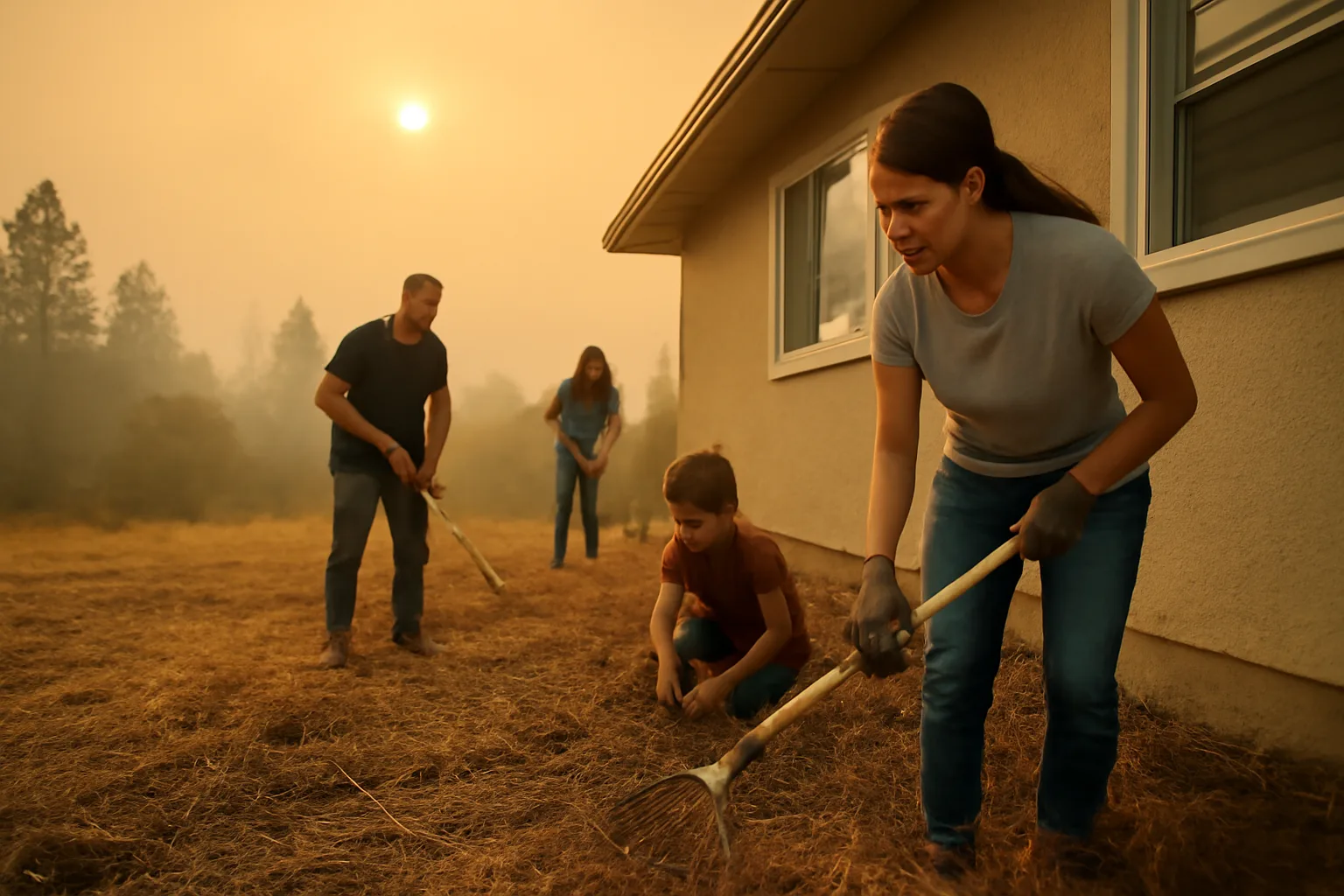
"Team wildfire" means treating fire prep like a household project with assigned jobs, not a solo scramble. Build defensible space in the 0-100 foot zones around your home, harden the structure's weak points (vents, roof, eaves), and document everything before your insurer's next inspection. California's defensible space law already applies statewide; a new zero-to-5-foot ember zone rule is still working through rulemaking.
What does "team wildfire" actually mean for a homeowner?
It means you stop treating wildfire prep as one homeowner's weekend chore and start treating it like a household operation with roles, a schedule, and a paper trail. One person tracks deadlines and insurer letters. Someone handles the yard and defensible space zones. Someone photographs the house for documentation. If you live with a partner, roommates, or extended family, splitting this up is the difference between a task that never gets finished and one that's done before wildfire season peaks. The reason this matters more than it used to: insurers in California, Colorado, Oregon, and Arizona are non-renewing policies at scale in wildfire-exposed zip codes, and many are now asking for proof of mitigation work, more than a checkbox. CAL FIRE's defensible space guidance and Ready.gov's wildfire preparedness pages both frame this as an ongoing maintenance cycle, not a one-time job [1]. Treating it as a team effort, with a shared checklist and a shared folder of photos and receipts, is what actually gets it maintained year over year instead of done once and forgotten. If you got a non-renewal or inspection letter, the practical team wildfire loop looks like this: read the letter carefully for the specific deficiency cited, assign each item to a person or a contractor, do the work, photograph the before-and-after, and keep dated records. That documentation is what you'll want on hand if you reapply for coverage or shop a new carrier.
When does the California defensible space law go into effect?
California's defensible space law isn't new; Public Resources Code 4291 has required 100 feet of defensible space clearance around structures in State Responsibility Areas since it was expanded in 2005, and it applies today [2]. What's changing is enforcement intensity and a newer, more granular "ember-resistant zone" requirement for the first 5 feet around the home, which CAL FIRE and the Board of Forestry have been developing through rulemaking under Assembly Bill 3074 (2020). As of this writing, that Zone 0 regulation has not been finalized as an enforceable statewide mandate; CAL FIRE's own defensible space page describes Zone 0 as recommended best practice while formal regulations are still in process [1]. Homeowners should check the current status directly with CAL FIRE or their local fire agency before assuming a specific effective date, because rulemaking timelines shift. Here's the part that trips people up: the 100-foot, three-zone defensible space requirement (Zones 1 and 2) has been the law for years and applies now if you're in a State Responsibility Area or a Very High Fire Hazard Severity Zone. The Zone 0 ember-zone rule is the piece still moving through the regulatory process. Don't wait for a final Zone 0 date to start; treat the 5-foot noncombustible zone as already-expected best practice, because insurers and inspectors are increasingly grading against it whether or not it's codified yet.
What fire-safe home rules take effect in 2026?
There isn't one single national "2026 fire code" that flips on for every homeowner; instead, several state-level and local rulemaking tracks are converging around 2025-2026 timelines. In California, that includes the ongoing Zone 0 ember-resistant zone regulation tied to AB 3074, which the Board of Forestry and Fire Protection has been developing with CAL FIRE for structures in Very High Fire Hazard Severity Zones. Colorado, Oregon, and Arizona each have their own wildfire building and defensible space codes moving on separate schedules, often set at the county or fire-district level rather than statewide. Because these rules vary by state, county, and even individual fire district, the honest answer is: check your specific jurisdiction's fire marshal or local fire protection district page for the current effective date rather than relying on a single national deadline. [Guided fill-in: confirm with your county fire marshal or fire protection district which defensible space and home-hardening rules apply to your parcel and their effective dates.] What you can act on today regardless of exact effective dates: ember-resistant vents, noncombustible material in the first 5 feet of the foundation, and a fire-rated (Class A) roof are consistently the three most-cited hardening priorities across CAL FIRE's guidance and the Insurance Institute for Business & Home Safety's wildfire research [1] [3]. Doing these now, before a rule technically forces it, is what actually keeps you insurable, since insurers are underwriting to expected risk, more than current statute.
Why won't people follow the defensible space law in California?
Cost, time, and confusion about what's actually required are the three big reasons compliance lags, and honestly, all three are legitimate obstacles, more than excuses. Clearing 100 feet of vegetation on a sloped, oak-covered lot can run into thousands of dollars in contractor fees, and CAL FIRE's own guidance acknowledges defensible space work is an ongoing maintenance obligation, not a one-time job, which means the cost repeats annually [1]. There's also a real gap in enforcement capacity. Local fire agencies are supposed to conduct defensible space inspections, but staffing shortages mean many properties go years without a visit, so the law exists on paper without a consistent feedback loop reminding homeowners it applies to them. A homeowner who's never been inspected has little day-to-day pressure to act, until an insurer letter arrives and suddenly the deadline feels real and short. Confusion is the third piece. The three-zone system (Zone 0 near-structure, Zone 1 to 30 feet, Zone 2 to 100 feet) has different rules for each band, and many homeowners genuinely don't know which zone they're standing in or what's allowed there. [Guided fill-in: confirm your parcel's exact zone boundaries and permitted vegetation with your local fire district, since slope and lot size shift the standard 30/100-foot lines.] Add in disputes over easements, shared property lines with neighbors who haven't cleared their side, and the emotional resistance to cutting down mature trees, and you get a law that's clear in text but messy in practice.
How to prevent wildfires around your own property
| Ember-resistant vents | Structure/Zone 0 | $150-$500 per vent | Blocks the #1 ignition path into attics and crawlspaces | |
|---|---|---|---|---|
| Class A roof material | Structure | $8,000-$25,000+ for full replacement | Roofs are the largest ember-catching surface | |
| 5 ft noncombustible zone | Zone 0 | $500-$3,000 in materials/labor | Removes fuel touching the house | |
| Vegetation clearance | Zones 1-2 | $500-$5,000+ depending on lot size | Slows fire spread and radiant heat | |
| Rain gutter guards / clearing | Structure | $100-$1,500 | Removes leaf litter that catches embers | (Cost ranges are general estimates; get local contractor quotes, since labor and material costs vary heavily by region.) Beyond your own lot, the most effective community-level prevention is coordinating with neighbors, since a single unmitigated property upwind can undo your work. Ready.gov specifically recommends working with neighbors on shared defensible space and evacuation planning as part of wildfire readiness. This is where the "team" framing extends past your household to your street. |
You can't stop a wildfire from starting somewhere else, but you can dramatically cut the odds it destroys your house, and that's really the honest scope of "prevention" at the homeowner level. CAL FIRE's data-backed guidance centers on the same idea utilities and researchers keep confirming: embers, not walls of flame, ignite most homes in wildfires, often landing far ahead of the actual fire front [1]. The highest-leverage moves, in rough order of impact per dollar spent: | Action | Zone | Rough cost range | Why it matters |
How to prepare for a wildfire before it happens
Preparation splits into two tracks that need to run in parallel: hardening the structure and getting your household's evacuation and documentation systems ready. Ready.gov's wildfire preparedness guidance recommends building an emergency kit, establishing a family communication plan, and knowing two ways out of your neighborhood before fire season, not during it. On the documentation side, this is where insurance non-renewal risk gets real. Before wildfire season, walk your property and photograph the roof, vents, eaves, deck, and the full 100-foot perimeter, dated and organized by zone. If you ever need to demonstrate mitigation work to an insurer or shop a new policy, dated before-and-after photos carry more weight than a verbal description. This is exactly the kind of organized packet a Wildfire Insurance Survival Kit is built around: a one-time $99 tool to help you assemble and structure that documentation yourself. To be clear, this doesn't involve negotiating with your insurer or filing claims on your behalf; you prepare the file and send it yourself. A basic seasonal prep checklist: - Clear roof and gutters of needles and leaves
- Move firewood piles and propane tanks at least 30 feet from structures
- Trim tree limbs to 10 feet from chimneys and other trees
- Confirm your address is visible from the street for responders
- Pack a go-bag with medications, documents, and chargers
- Know your evacuation zone and sign up for local emergency alerts [Guided fill-in: check your county emergency management or fire district page for the specific evacuation zone map and alert sign-up for your address.]
How to prevent forest fires (and how that's different from protecting your home)
Preventing forest fires at the landscape level is mostly about ignition sources: campfires, equipment sparks, and downed power lines account for the large majority of wildfire starts, according to National Interagency Fire Center data cited across state fire agency pages. Fully extinguishing campfires, avoiding parking or driving on dry grass (a hot catalytic converter can ignite grass in minutes), and following local burn-ban rules are the individual-level actions that actually move the needle on ignition prevention. But here's the distinction that matters for your insurance situation: preventing a forest fire from starting is a different problem from preventing your house from burning once a fire is already burning nearby. You have almost no control over the first one. You have a lot of control over the second one, through defensible space and home hardening. Insurers underwriting wildfire risk are grading the second thing, your structure's survivability, not your campfire habits. That's why CAL FIRE's defensible space program and most state fire marshal guidance focus overwhelmingly on structure and property-level hardening rather than general forest fire prevention messaging; it's the lever homeowners actually control [1]. If you want to contribute to the bigger picture, follow local fire restrictions and report unattended fires, but don't confuse that with the mitigation work your insurer actually wants documented.
How to avoid forest fires when you're recreating or living near wildland
If you're camping, hiking, or just living adjacent to wildland, the avoidable-ignition list is short and well established: fully drown and stir campfires until they're cold to the touch, never leave a fire unattended, avoid off-road driving or parking over dry vegetation, and check local burn restrictions before any outdoor burning, including debris piles. Many wildfire starts trace back to equipment use, like chainsaws, mowers, or grinders, during hot, dry, and windy conditions, which is why many fire districts restrict such work on Red Flag Warning days. For homeowners specifically, the version of this that matters most is debris burn piles and equipment use near your own defensible space zones. If you're doing vegetation clearance yourself, don't burn the slash pile on a windy afternoon next to the same zone you just cleared; check with your local fire department about permit requirements and safe burn windows first. [Guided fill-in: confirm burn permit rules and Red Flag Warning restrictions with your local fire protection district before any debris burning.] The uncomfortable truth here is that most homeowners in wildfire zones aren't going to personally start the fire that threatens their house. It's going to come from somewhere else, sometimes miles away, driven by wind and embers. Which loops back to the core point: your best lever isn't preventing ignition elsewhere, it's making your own structure and the space around it inhospitable to the embers that arrive.
How to prepare for forest fires when you live in a high-risk zone
Preparation for someone living near forest or wildland is essentially the defensible space and hardening work already covered, plus a heavier emphasis on evacuation logistics because response times and road access tend to be worse in remote areas. Ready.gov specifically recommends identifying multiple evacuation routes for wildland-adjacent homes, since a single access road can be blocked by fire or falling trees. If your property backs up to national forest, state forest, or open wildland space, coordinate directly with that land management agency where possible; some maintain fuel breaks or conduct prescribed burns that affect your defensible space planning. [Guided fill-in: contact your local U.S. Forest Service ranger district or state forestry office to ask about fuel treatment schedules near your parcel.] A few forest-adjacent specifics worth flagging: keep a chainsaw-ready go-kit if downed trees are common after wind events, maintain a water source and hose long enough to reach your roofline, and if you're on well water, confirm your pump has a generator backup, since power outages during fire events are common and you may need water pressure without grid power.
Is Santa Barbara safe from fire?
No coastal California community, including Santa Barbara, is "safe" from wildfire in an absolute sense; the region has a documented history of major fires, including the 1990 Painted Cave Fire and the 2017 Thomas Fire, which at the time was the largest wildfire in modern California history and burned into Santa Barbara County, followed by the deadly Montecito debris flow in January 2018 [4]. Much of the wildland-urban interface around Santa Barbara and Montecito sits in a CAL FIRE-mapped Very High Fire Hazard Severity Zone, which is the state's own risk classification, not a media label [5]. What that means practically: if you live in or near Santa Barbara's foothill communities (Mission Canyon, Montecito, San Roque, the Riviera), you should check your specific parcel against CAL FIRE's Fire Hazard Severity Zone viewer rather than relying on the city's general reputation for good weather and ocean influence [5]. Coastal proximity and marine layer humidity do lower fire risk somewhat compared to interior chaparral zones, but they don't eliminate it, especially during Sundowner wind events, a local downslope wind pattern that has driven several of the area's worst fires. If you're house-hunting or already own in the Santa Barbara wildland-urban interface, treat the defensible space and hardening guidance in this article as directly applicable, not optional because of the coastline. Insurers underwriting the area are already pricing in that risk; several major carriers have pulled back from writing new policies in California's high-risk zones statewide, a trend the California Department of Insurance has addressed through the Sustainable Insurance Strategy and updated FAIR Plan rules .
How can we prevent forest fires at the community level?
Community-level prevention works differently than individual prevention; it's coordinated defensible space across property lines, shared fuel breaks, and fire-adapted community programs like Firewise USA, a National Fire Protection Association program that helps neighborhoods organize collective mitigation work . A single Firewise-recognized community typically involves a local risk assessment, an action plan, and an annual volunteer investment of mitigation hours tracked across the neighborhood, more than one household. The practical reason this matters for insurance: some carriers and state programs have started giving credit, or at least favorable underwriting attention, to communities with active Firewise recognition or similar coordinated mitigation efforts, though this varies by insurer and isn't guaranteed. If your neighborhood isn't organized, raising this at your HOA or a neighborhood association meeting is a reasonable next step, especially if several households have already received non-renewal letters, since that's usually the moment people become willing to coordinate. At the policy level, prescribed burning and fuel treatment programs run by CAL FIRE, the U.S. Forest Service, and state forestry agencies reduce the fuel loads that make wildfires larger and faster-moving; these are landscape-scale tools individual homeowners can support (through public comment, local forestry partnerships, or simply not opposing prescribed burn windows) but can't execute themselves. The homeowner's actual job is the 100 feet around the house, plus showing up for the neighborhood conversation.
What should your household's wildfire team actually do this month?
If you got a non-renewal letter or you're watching neighbors lose coverage, the next 30 days matter more than a long-term plan you'll never start. Here's a realistic division of labor for a two-adult household, adjustable for whoever you've got: Person A: walk the property and photograph every side of the house, the roof, vents, gutters, and the full defensible space perimeter, organized by zone and dated. Cross-reference against your local fire district's specific requirements, since exact clearance distances and permitted materials vary by jurisdiction. [Guided fill-in: pull your county or fire protection district's defensible space checklist to confirm exact requirements for your zone.] Person B: get quotes on the highest-leverage hardening items, ember-resistant vents and any exposed combustible material within 5 feet of the foundation, since these tend to be both the cheapest fixes and the most commonly cited insurer concerns. Both: read the actual non-renewal or inspection letter line by line and address the specific deficiencies named, not a generic checklist. Insurers cite specific things; responding to the specific thing is what gives you a real shot at reapplying or shopping a new carrier with evidence in hand. For deeper guidance on the individual pieces, see our breakdowns on fire-safe landscaping next to the house, defensible space fundamentals, and general wildfire prevention practices. If your risk involves specific structure fire scenarios, our guides on house fire basics and fire at a house response cover response and prevention separately. If you're in Washington and considering professional clearing crews, see our piece on defensible space clearing contracts with Washington DNR for how those programs are structured, since a similar contractor model is spreading to other states.
Frequently asked questions
When does the California defensible space law go into effect?
The core 100-foot defensible space requirement under Public Resources Code 4291 already applies statewide in State Responsibility Areas and has since a 2005 expansion. A newer 5-foot "Zone 0" ember-resistant rule tied to Assembly Bill 3074 is still moving through CAL FIRE and Board of Forestry rulemaking; check CAL FIRE's site for its current status before assuming a final effective date.
Why won't people follow the defensible space law in California?
Cost, inconsistent enforcement, and confusion about zone boundaries are the main reasons. Clearing 100 feet of vegetation on a sloped or wooded lot can cost thousands and needs annual upkeep, while many properties go years without a fire agency inspection, so there's little day-to-day pressure until an insurer letter arrives.
How do I prevent wildfires around my own house?
You can't stop a wildfire from starting elsewhere, but ember-resistant vents, a Class A roof, a noncombustible 5-foot zone around the foundation, and cleared vegetation out to 100 feet are the proven highest-leverage steps, since embers landing on or near the structure cause most home ignitions, per CAL FIRE guidance.
How do I prepare for a wildfire if I live in a high-risk zone?
Build an emergency kit and family communication plan per Ready.gov, know at least two evacuation routes, and photograph your property (roof, vents, defensible space zones) before fire season for insurance documentation. Combine structure hardening with evacuation readiness; both need attention, more than one.
How can we prevent forest fires from starting in the first place?
Fully extinguish campfires, avoid driving or parking on dry grass, follow local burn permit rules, and avoid equipment use like mowing or grinding during Red Flag Warning conditions. Most wildfire starts trace to human ignition sources or equipment sparks rather than natural causes, which is why these individual habits matter.
How do I avoid forest fires while camping or living near wildland?
Drown and stir campfires until cold, never leave fire unattended, check local burn restrictions before any outdoor burning, and avoid parking over dry vegetation since hot exhaust systems can ignite grass. On Red Flag Warning days, postpone chainsaw, mower, or grinder use near dry vegetation.
What fire-safe home rules take effect in 2026?
There's no single national 2026 deadline; California's Zone 0 ember-resistant zone rule under AB 3074 is still in rulemaking, and other states set defensible space and building codes at the county or fire-district level on separate timelines. Check your specific county fire marshal or fire protection district for your actual effective date.
Is Santa Barbara safe from fire?
No coastal California community is fully safe from wildfire. Much of Santa Barbara's foothill and wildland-urban interface area, including parts of Montecito, sits in a CAL FIRE-mapped Very High Fire Hazard Severity Zone, and the region has a documented history including the 2017 Thomas Fire. Check CAL FIRE's hazard zone viewer for your specific parcel.
What is Zone 0 and does it apply to my house yet?
Zone 0 is the 0-5 foot ember-resistant zone immediately around a structure, requiring noncombustible materials and no vegetation contact with the home. It's currently recommended best practice under CAL FIRE guidance while formal statewide regulation under AB 3074 is finalized, so it's not yet a universal legal mandate, but insurers increasingly expect it.
What's the difference between preventing forest fires and protecting my home from one?
Preventing forest fires means stopping ignition sources like campfires or equipment sparks, which you have limited control over beyond your own behavior. Protecting your home means defensible space and structure hardening, which you fully control and which is what insurers actually evaluate when deciding whether to renew your policy.
What should I do first if I got a wildfire insurance non-renewal letter?
Read the letter for the specific deficiency cited, not a generic checklist item. Photograph and document your current defensible space and structure condition, address the named deficiencies first, and keep dated records of all work. This documentation is what you'll need if you reapply or shop a new carrier.
Does clearing defensible space guarantee my insurance will be renewed?
No. Defensible space work improves your risk profile and gives you documentation to present, but insurers make renewal decisions based on their own underwriting criteria, which can include factors beyond your control like regional wildfire history or state-level policy shifts. Nobody can promise coverage or reinstatement based on mitigation work alone.
Sources
- CAL FIRE, Defensible Space (PRC 4291): Defensible space zone structure, ember ignition risk, and Zone 0 best-practice status
- California Legislature, Assembly Bill 3074 (2020): Statutory basis for the Zone 0 ember-resistant zone rulemaking
- CAL FIRE, Fire Hazard Severity Zone Viewer: Very High Fire Hazard Severity Zone mapping used to assess Santa Barbara area risk
- California Department of Insurance, Sustainable Insurance Strategy: State regulatory response to insurer pullback and FAIR Plan changes in high wildfire-risk areas
- National Fire Protection Association, Firewise USA Program: Community-level wildfire mitigation program structure and requirements